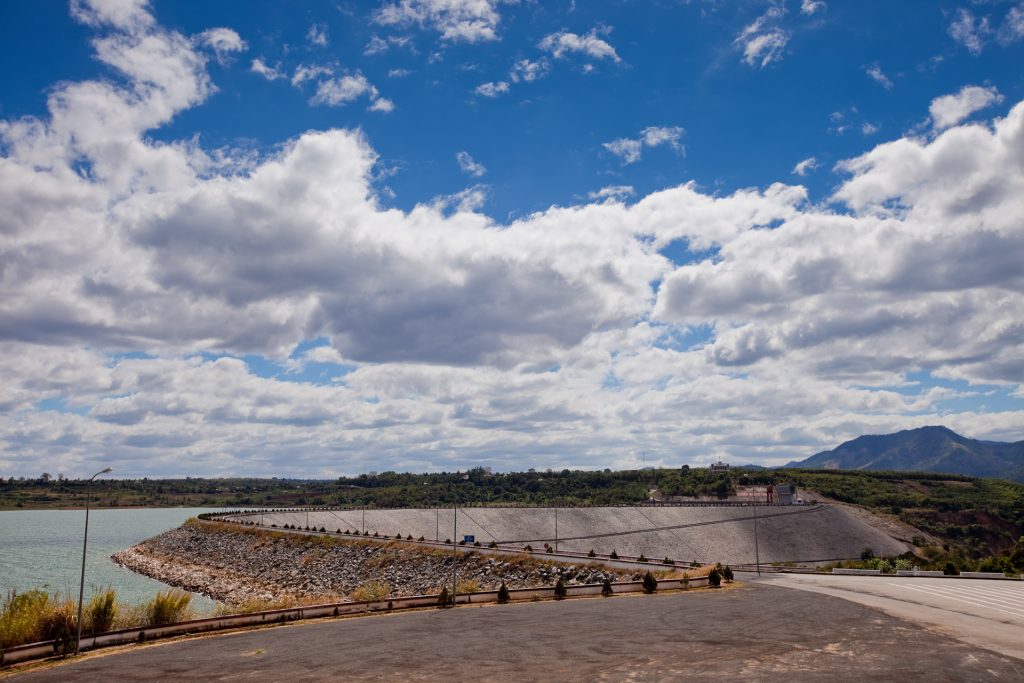

The Mekong is one of the world’s great working rivers: it feeds tens of millions of people, sustains the planet’s largest inland fishery and, increasingly, turns turbines. Laos has pursued a strategy of becoming the ‘battery of Southeast Asia’, building dozens of dams on the Mekong mainstream and its tributaries to export electricity. A series of drought years is now testing that strategy — physically, by starving reservoirs, and politically, by intensifying arguments about who bears the costs downstream.
The pressure is visible in the data: record-low flows, exposed riverbanks in the dry season, and generation shortfalls at plants that were financed on assumptions of steadier water. Analysis by the World Bank and regional bodies frames the Mekong’s challenge as a basin problem, not a national one. Our homepage coverage and Blog reporting follow how drought is reshaping the economics and diplomacy of hydropower on the river.
When the River Runs Low
Hydropower’s vulnerability to drought is simple arithmetic: less water means less energy, whatever the installed capacity says. El Niño years have repeatedly cut output across the basin, forcing utilities to buy emergency power or ration supply — an awkward position for an export strategy sold on reliability. Climate projections for the basin promise not simply less rain but more variable rain: fiercer wet seasons, longer dry ones, and greater uncertainty for the reservoir operators who must decide, daily, between generating now and saving water for later.
Drought also concentrates every other dispute about the dams. Low flows mean less dilution for pollution, less sediment reaching the delta — where it is needed to fight coastal erosion and salinity — and harder passage for migratory fish whose spawning cues are tied to the river’s natural pulse. Downstream farmers and fishers in Cambodia and Vietnam experience the same dry year very differently from a dam operator, and the gap between those experiences is where the basin’s politics now live.
The Diplomacy of Shared Water
Five countries share the lower Mekong, and their institutions for managing it were designed in a gentler era. The Mekong River Commission coordinates data and consultation but cannot veto projects, while upstream dams in China operate under separate arrangements and perennial suspicion about how much water they hold back in dry years. To their credit, data-sharing has improved — flow notifications and year-round hydrological data now flow more freely than a decade ago — because drought makes the value of shared information undeniable.
Negotiations increasingly link water to power trade. Laos’s best customers for electricity are its downstream neighbours, whose grievances about fisheries and sediment sit on the other side of the table. That interdependence, uncomfortable as it is, may be the basin’s best protection: grids, like rivers, punish those who ignore their neighbours. Regional power-trading plans now explicitly discuss coordinating dam operations with solar and wind, whose output peaks in the dry, sunny months when reservoirs run low.
Diversifying Beyond the Dam
The strategic response taking shape is diversification. Laos and its neighbours are adding solar and wind at pace — resources whose drought-season abundance complements hydropower’s weakness — and discussing pumped storage and batteries to firm the mix. For future Mekong projects, drought is changing the design brief itself: smaller run-of-river plants, fish passages held to higher standards, environmental flows written into licences, and financial models stress-tested against dry decades rather than average years.
None of this means the dams already built will stop mattering; they will generate for half a century, and the region needs their power. It means the river’s next chapter will be written under a harder climate than its last. The Mekong has always rewarded those who respect its variability. Drought is teaching that lesson again, to finance ministries and foreign ministries alike.