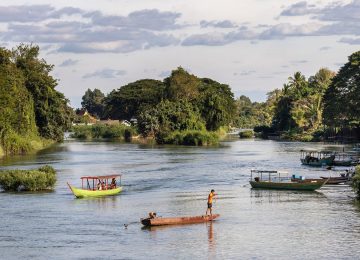

For landlocked Laos, geography was long destiny: mountains, no seaport, and neighbours reachable mainly by slow roads. Steel is changing that calculation. The railway connecting Vientiane north to the Chinese border — and through it to one of the world’s largest rail networks — has begun to redraw trade routes across the Mekong region, and a wave of connected infrastructure is following in its wake.
A Railway Rewiring Regional Trade
The line’s impact shows up first in freight. Goods that once spent days on mountain roads now move by train in hours, cutting the cost of exporting Lao agricultural produce, minerals and manufactured goods, and making imports cheaper in the other direction. Cross-border passenger services have added a second dimension: tourists and traders now ride between the Lao capital and destinations in China, with through-services towards Thailand extending the network’s reach southwards.
Development economists at institutions such as the World Bank’s East Asia and Pacific programme have long argued that connectivity is the Mekong region’s biggest economic lever — the difference between producing for a small domestic market and plugging into supply chains that span a continent. Our infrastructure coverage follows the projects turning that argument into concrete and steel.
Beyond the Tracks: Roads, Power and Dry Ports
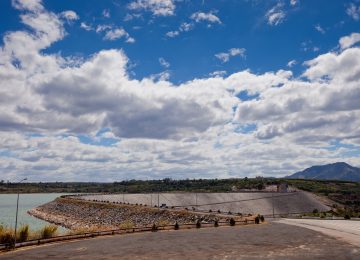
A railway is only as useful as what connects to it. Around the main stations, logistics parks and “dry ports” are being developed to consolidate cargo, handle customs and feed freight to and from the line. Road upgrades link provincial production zones to railheads, while the region’s hydropower build-out — long the backbone of Lao exports — supplies both the electricity and part of the economic logic for industrial growth along the corridor.
The opportunities come with hard questions. Infrastructure on this scale is financed largely with debt, and analysts at bodies like the Asian Development Bank stress that returns depend on the unglamorous work around the assets: efficient border procedures, competitive logistics markets and skills training so local firms can use the corridor rather than just watch goods pass through it.
What It Means for the Mekong Region
Zoom out, and the pattern is regional. Thailand is upgrading its own rail links, Vietnam is planning new lines, and Cambodia is studying connections — each project making the others more valuable. A genuine Mekong rail network would let a container travel from the South China Sea to inland China without touching a truck, reshaping which cities become hubs and which industries cluster where.
For Laos, the stakes are existential in the best sense: the chance to convert “landlocked” into “land-linked,” in the phrase its planners favour. Whether that promise is fulfilled will depend less on the trains — which are already running — than on the policies, ports and businesses built around them in the next decade. Read more in our regional news section.